4.2-Magnitude Earthquake Reported in Los Angeles
4.2-Magnitude Earthquake Reported in Los Angeles
Last updated: November 29, 2026. Confirm the latest magnitude, epicenter, depth, timing, and damage information through the U.S. Geological Survey (USGS) and local emergency-management agencies.
A reported magnitude 4.2 earthquake shook the Los Angeles area as seismic activity continued across Southern California, according to KTLA.
Other reports described two earthquakes followed by aftershocks in the region. Initial summaries reported no immediate injuries, but early information may change as emergency crews inspect buildings, roads, utilities, and public facilities.
Key Facts
- Latest reported magnitude: 4.2
- General location: Los Angeles area
- Epicenter and depth: Awaiting confirmation from the USGS catalog
- Reported effects: Residents felt shaking, with additional tremors reported
- Initial injury information: No immediate injuries were reported in the available summaries
- Damage information: No comprehensive, confirmed damage assessment was available in the supplied reports
One report referenced a magnitude 5.0 earthquake followed by multiple aftershocks. The available summaries do not establish whether that event and the reported magnitude 4.2 earthquake belong to the same seismic sequence. The USGS catalog should determine the official timeline, magnitude, depth, and location of each event.
What a Magnitude 4.2 Earthquake Means
Magnitude measures the energy released at an earthquake’s source. It does not describe the exact shaking experienced at every location.
People near the epicenter may feel a sharp jolt, while those farther away may notice weaker movement or nothing at all. Depth, distance, local soil conditions, building design, and a person’s location can affect the intensity of shaking.
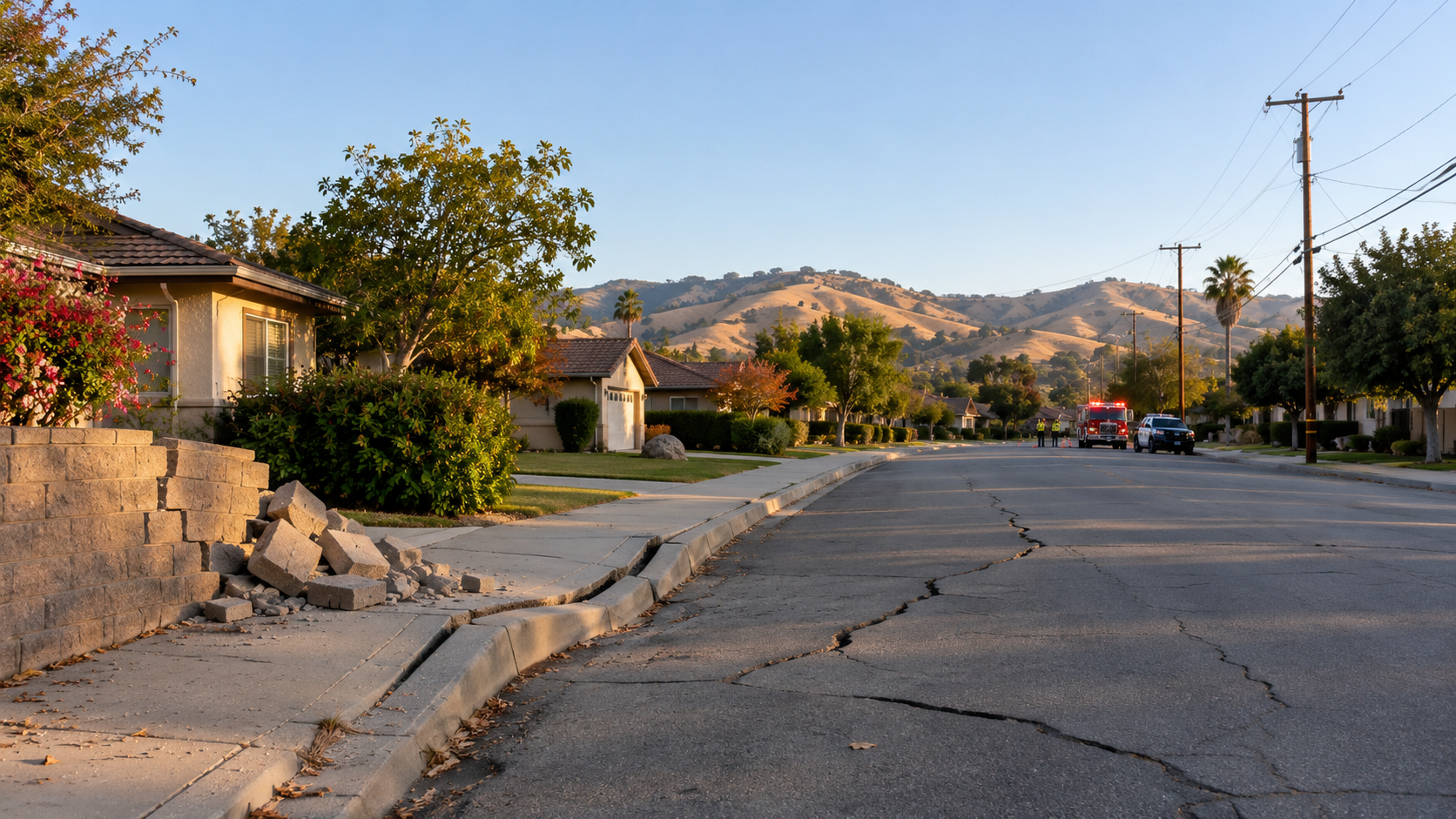
A magnitude 4.2 earthquake may cause little or no structural damage in many areas, but it can still knock objects from shelves, break glass, activate alarms, or worsen existing cracks. Older buildings and structures weakened by earlier shaking may face greater risks.
- Magnitude describes the earthquake’s size at its source.
- Intensity describes how strongly people and structures experience the shaking at a specific location.
One earthquake can therefore have a single magnitude but many different intensity levels across the region.
Earthquake Sequence and Aftershocks
Reports from ABC7 Chicago and related coverage described two earthquakes followed by aftershocks in the Los Angeles area. USA Today separately reported multiple aftershocks following a magnitude 5.0 earthquake. The available summaries do not provide enough information to combine these reports confidently.
Official seismic data should establish:
- Which event occurred first.
- Whether the magnitude 5.0 and magnitude 4.2 earthquakes belong to the same sequence.
- The magnitude, location, and timing of later tremors.
- Whether smaller earthquakes qualify as aftershocks.
- Which communities experienced the strongest shaking.
An aftershock is a smaller earthquake that follows a larger earthquake in the same general area. Aftershocks occur as stress in the Earth’s crust adjusts after the initial rupture. They may continue for hours, days, weeks, or longer.
Not every later earthquake is automatically an aftershock. Scientists consider its timing, location, magnitude, and relationship to the earlier event before classifying it as part of the same sequence.
Epicenter, Depth, and Shaking Differences
The available reports identify only the broader Los Angeles area. They do not provide a verified epicenter, depth, or official event time. Those details should come from the USGS earthquake catalog before publication or republication.
The epicenter is the point on Earth’s surface directly above the earthquake’s underground origin. Depth describes how far below the surface the rupture began. Shallow earthquakes can produce stronger local shaking than deeper earthquakes of the same magnitude, although distance, geology, and building conditions also matter.
Residents may report different experiences because Los Angeles includes soft sediment basins, hills, dense urban areas, older buildings, high-rise structures, and newer construction. Eyewitness accounts can show how widely an earthquake was felt, but seismic instruments and official felt reports provide stronger evidence about shaking intensity.
What Residents Should Do
Drop, Cover, and Hold On
During an earthquake:
- Drop to the ground before the shaking knocks you down.
- Cover your head and neck under a sturdy table or desk. If no shelter is available, use your arms and move away from windows and falling objects.
- Hold on until the shaking stops.
Do not run outside during active shaking. Falling glass, masonry, signs, power lines, and other debris can create greater danger outdoors. Do not use elevators.
If you are in bed, stay there and cover your head with a pillow unless you are directly beneath a heavy fixture or another hazard. If you are driving, pull over safely away from bridges, overpasses, power lines, trees, and signs. Remain in the vehicle until the shaking ends.
Check for Hazards After Shaking Stops
Inspect your surroundings cautiously. Watch for:
- Gas odors or hissing sounds
- Downed power lines
- Fires or smoke
- Broken glass
- Water leaks
- Fallen objects
- Damaged stairways
- Major cracks in walls, ceilings, or foundations
- Structural movement or unusual building sounds
Leave a building if it appears unsafe, but do not enter visibly damaged structures. Call emergency services for fires, serious injuries, trapped people, gas leaks, or immediate threats. Avoid nonemergency calls when networks are congested.
Wear sturdy shoes and keep a flashlight, batteries, medication, water, a charged phone, and basic first-aid supplies available. Do not use matches or open flames near a suspected gas leak.
Prepare for Additional Shaking
Aftershocks can occur without warning. Stay away from damaged areas and keep essential supplies within reach. When safe, check on children, older adults, neighbors, and people with disabilities. Follow official evacuation instructions and avoid sharing unverified claims about closures, casualties, rescue operations, or evacuation orders.
Potential Damage and Disruptions
A magnitude 4.2 earthquake may cause limited damage, but effects depend on the epicenter, depth, local geology, construction quality, and previous damage. Possible effects include falling household objects, broken dishes or windows, cracked plaster or drywall, minor damage to older buildings, activated alarms, temporary utility interruptions, road debris, and damage to weakened structures.
No comprehensive, confirmed damage assessment was included in the supplied reports. Specific claims about building damage, road closures, outages, or evacuations should be published only after verification by officials or credible local reporting.
Transportation and utility agencies may inspect roads, bridges, rail lines, airports, pipelines, gas systems, electrical networks, and water infrastructure. Before traveling, check official transportation updates. Avoid debris, damaged pavement, flooded areas, and downed power lines.
Official Updates and Verification
The USGS provides earthquake information, while Los Angeles city and county agencies, fire and police departments, utility providers, and transportation authorities provide local operational updates. Officials may revise casualty and damage figures as inspections continue.
Reliable updates should identify the source, publication time, event time, location, and whether the information is preliminary. Use time-stamped language such as, “As of [time], officials reported no confirmed injuries.”
Do not share guaranteed predictions, unverified casualty totals, old photographs presented as current damage, videos without confirmed locations and timestamps, or unofficial evacuation orders.
Conclusion
A reported magnitude 4.2 earthquake shook the Los Angeles area amid continuing seismic activity and reports of aftershocks. Initial summaries said no immediate injuries had been reported, but officials may revise that information as inspections continue.
Residents should prepare for possible additional shaking, stay away from damaged structures, use Drop, Cover, and Hold On, and follow official alerts. Check the USGS earthquake catalog and local authorities for verified information about injuries, damage, transportation, utilities, and evacuations.
Frequently Asked Questions
How strong was the latest Los Angeles earthquake?
The latest event identified in the available reporting was magnitude 4.2. The official magnitude, depth, location, and time should be confirmed through the USGS earthquake catalog.
Were there injuries or major damage?
The available summaries reported no immediate injuries. That is an early status, not a final assessment. Check local authorities and emergency services for later updates.
Why are aftershocks happening?
Aftershocks occur as the Earth’s crust adjusts after an earthquake. They are usually smaller than the initial event but can still damage weakened structures or dislodge objects.
Could a larger earthquake follow?
A larger earthquake is possible, but scientists cannot predict the exact time, location, or magnitude of an individual future earthquake. Residents should prepare for additional shaking and monitor official updates.
What should people do during an earthquake?
Drop to the ground, cover your head and neck under a sturdy table or desk, and hold on until the shaking stops. Stay away from windows and objects that may fall. Do not run outside during active shaking.
Related Articles
-
 Russia Claims It Downed 1,000 Ukrainian Drones
-
 Spain Election: Housing Crisis and Far-Right Gains
-
 Pakistan Deploys Troops to Saudi Arabia: What We Know
-
 UK DWP Cyberattack Disrupts Pension and Benefit Services
-
 Vermont Father-Son Detectives Solve 1986 Cold Case
-
 Somali American Uber Driver Dies After Minnesota Attack
-
 Trump Calls D.C. Golf Course Flooding an “Act of God”
-
 Netanyahu Offers Eisenkot First Turn in Power-Sharing Plan
-
 DWP Cyberattack: What We Know About Offline Systems
-
 Why Republicans Are Struggling to Defend Trump’s Tariffs
-
 US Forces Reportedly Repel Suspected Iranian Drones
-
 Taiwan Opposition Retains Taipei in Mixed Local Election
-
 Marching Bands Raise Funds After Macy’s Parade Delay
-
 Magnitude 5 Earthquake Strikes California, USGS Says
-
 Netanyahu Offers Eisenkot First Turn as Prime Minister
-
 Afghanistan School Explosion Kills 10, Wounds 110