Netanyahu Offers Eisenkot First Turn in Power-Sharing Plan
Netanyahu Offers Eisenkot First Turn in Proposed Power-Sharing Government
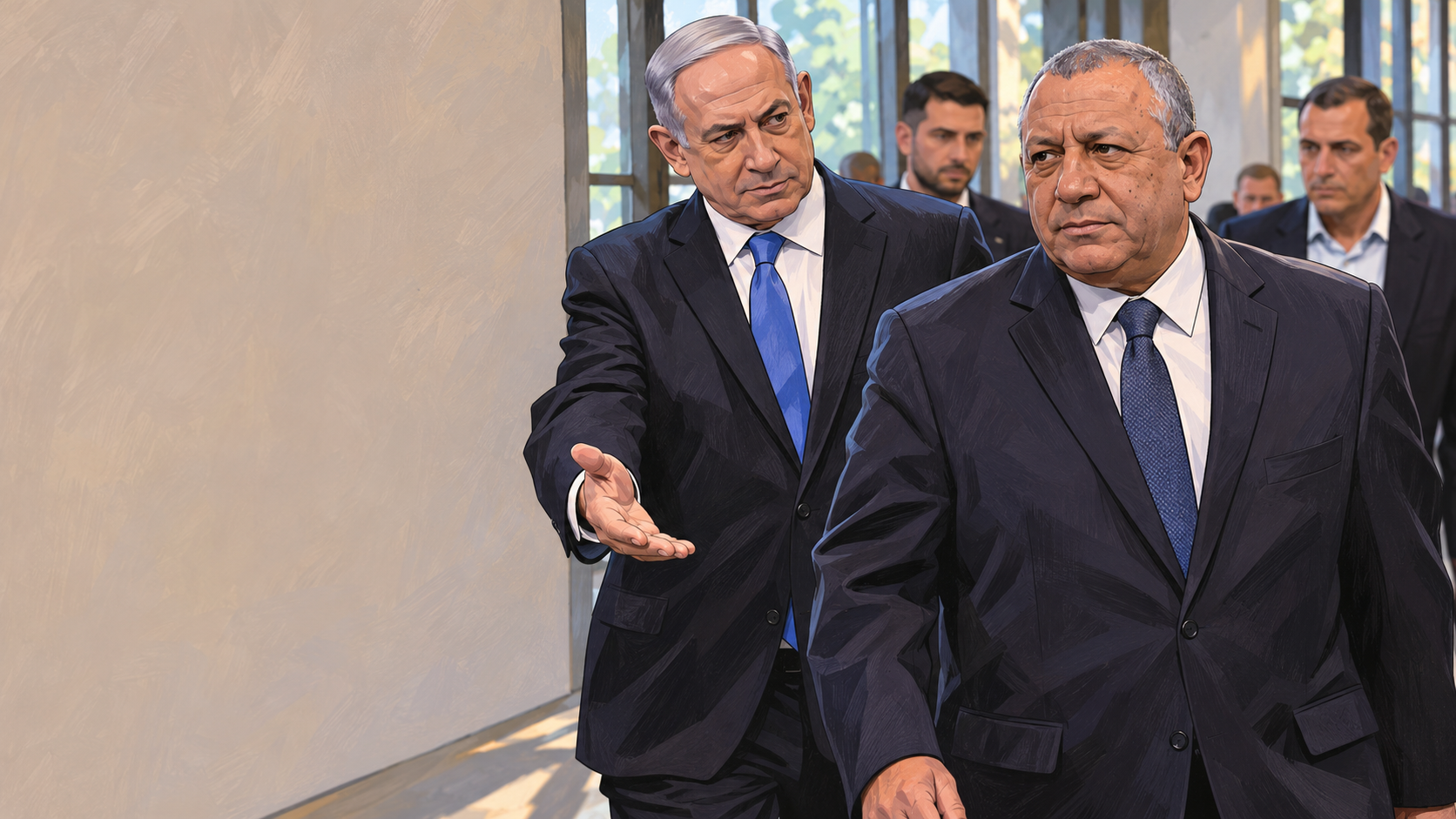
Israeli Prime Minister Benjamin Netanyahu has reportedly offered political rival Gadi Eisenkot the opportunity to serve as prime minister first under a proposed power-sharing arrangement. The plan would involve a rotating premiership, with Eisenkot leading the government during the initial phase before Netanyahu potentially takes a later turn.
Netanyahu and Eisenkot were also reported to have agreed to meet for coalition talks on Sunday. The meeting could mark the beginning of negotiations over a unity government, but it does not confirm that an agreement has been reached. Source 1
The reported proposal is significant because it would place Eisenkot, a political rival, at the head of the government before Netanyahu. However, the available reports do not establish the rotation’s duration, the coalition’s membership, its policy platform, or whether it would command sufficient parliamentary support.
What Netanyahu Reportedly Offered
Eisenkot Would Lead the First Rotation
Netanyahu reportedly proposed that Gadi Eisenkot serve as Israel’s prime minister during the first phase of a rotating-premiership arrangement. Netanyahu would potentially assume the office during a later phase. Source 3
The proposal has been described as a power-sharing agreement under which the two leaders would rotate the premiership. The available source material does not specify how long either leader would serve or what event would trigger the transfer of power. Source 5
The wording is important: the reports describe a proposal, not a finalized coalition agreement. There is no confirmation that Eisenkot accepted the first rotation or that Netanyahu secured support from the parties needed to form a government.
The Proposed Government Would Seek Unity
A unity government generally brings together leaders or parties from opposing political blocs. Such governments can broaden political representation, reduce dependence on a narrow coalition, or manage a period of political uncertainty.
A Netanyahu-Eisenkot government would require more than a personal understanding between the two politicians. Negotiators would need to settle:
- Support from relevant political parties.
- Cabinet appointments and ministry allocations.
- A shared legislative program.
- Parliamentary backing.
- The legal structure for rotating the premiership.
- Procedures for resolving disputes.
- Rules governing a coalition breakdown.
None of these terms has been confirmed in the available reports.
Coalition Talks Were Expected to Continue
Netanyahu and Eisenkot were reported to have agreed to meet on Sunday for coalition discussions. Source 1
The planned meeting suggests that the proposal had moved beyond a purely public statement into exploratory negotiations. It does not demonstrate that the talks would succeed. The source summaries do not provide a confirmed agenda, detailed negotiating framework, or outcome.
Who Are Netanyahu and Eisenkot?
Benjamin Netanyahu
Benjamin Netanyahu is Israel’s prime minister and the politician who reportedly made the offer. The proposal would allow him to remain central to a future government while giving Eisenkot the first period as prime minister.
The arrangement could provide Netanyahu with a defined path back to the premiership without requiring him to lead the government immediately. It could also help him pursue a broader coalition involving a political rival. The available reports do not identify his precise political calculation or provide confirmed information about coalition numbers and party commitments.
Gadi Eisenkot
Gadi Eisenkot is described in the reports as Netanyahu’s political rival and the proposed first prime minister. Source 7
The offer would give Eisenkot direct control of the government during the first rotation. It could provide authority over national policy, cabinet priorities, and coalition negotiations, while requiring him to cooperate with Netanyahu despite their rivalry.
The supplied reports do not specify Eisenkot’s party affiliation, parliamentary strength, or public response. They do not confirm whether he accepted, rejected, or endorsed the proposal.
How a Rotating Premiership Could Work
The reported sequence is straightforward:
- Eisenkot would serve as prime minister first.
- Netanyahu would potentially assume the premiership during a later rotation.
- The coalition would continue under a shared governing arrangement.
For the system to function, the parties would need to define a transition date or trigger. They would also need to clarify the length of each rotation and the legal status of the leader who was not serving as prime minister.
A detailed agreement would likely need to address:
- The length of each leadership period.
- The formal date of the transfer.
- The powers of the alternate prime minister.
- The procedure for transferring authority.
- The consequences if one leader leaves the coalition.
- The process for handling disputes.
- The government’s status if parliamentary support declines.
The available reporting does not answer these questions.
Shared Authority Across the Coalition
A rotating premiership would not eliminate the need for continuous cooperation. Both leaders would likely seek influence throughout the coalition’s life, even while only one held the premiership at a given time.
Areas requiring coordination could include national security, foreign policy, the state budget, cabinet appointments, emergency decisions, legislative priorities, and relations with coalition parties. These are structural considerations, not confirmed terms of the reported proposal.
The arrangement could become unstable if one leader controlled the premiership while the other controlled a major party or influential ministry. Each side would need enough authority to remain invested in the coalition without being able to unilaterally block the other.
Legal and Parliamentary Questions
Any rotating-premiership agreement would need to operate within Israel’s legal and parliamentary framework. Negotiators would need to determine how the rotation would be formalized and what parliamentary approval would be required.
Important questions include:
- Who would become acting prime minister if the scheduled transition were delayed?
- Could either leader terminate the arrangement unilaterally?
- What would happen if the coalition lost its majority?
- Could one leader call an early election?
- How would disagreements over cabinet decisions be resolved?
- What legal safeguards would protect the transfer of power?
The reports provide no confirmed answers. Until these questions are addressed, the proposal remains a political concept rather than an enforceable governing framework.
Why the Proposal Could Appeal to Both Leaders
For Netanyahu, bringing Eisenkot into government could broaden its political base and reduce dependence on a narrower group of coalition partners. Offering Eisenkot the first rotation would make the proposal more substantial than a conventional ministerial appointment while preserving Netanyahu’s possible future return to the premiership.
For Eisenkot, the arrangement could provide immediate access to the top office and influence over government policy. It could offer a platform for shaping cabinet priorities, security policy, diplomatic policy, and coalition negotiations.
The proposal would also carry risks. Eisenkot could face criticism for cooperating with Netanyahu and could become associated with decisions made by the coalition. If the rotation failed, he could lose political credibility and face responsibility for the government’s collapse. Netanyahu would likewise risk losing influence or being denied the promised later rotation.
No source summary reports Eisenkot’s response or either leader’s internal political calculations.
Main Obstacles to a Netanyahu-Eisenkot Government
Uncertain Political Support
An agreement between two leaders would not automatically secure support from their parties or parliamentary allies. Coalition partners could object to Eisenkot receiving the first rotation, Netanyahu retaining a later path to the premiership, or changes in cabinet distribution.
The available reports do not identify which parties support or oppose the plan.
Policy Differences
A unity government would need agreement on major policy questions, potentially including security policy, relations with international partners, budget priorities, institutional issues, and the powers of the two coalition leaders.
The reports do not attribute specific positions on these matters to Netanyahu or Eisenkot. Any assessment of their policy differences therefore remains conditional.
Trust and Enforcement
Rotating premierships depend on confidence that both sides will honor the agreement. The leaders would need safeguards against delaying the transition, withdrawing from the coalition, calling an early election, or using control of a ministry to undermine the other side.
Coalition discipline and a credible enforcement mechanism would be essential. If either side believed the other could avoid the scheduled transfer without meaningful consequences, the agreement could become unstable from the beginning.
An Offer Is Not an Agreement
The central distinction is between a reported offer and a completed coalition deal. The available sources do not confirm:
- A signed coalition agreement.
- Eisenkot’s acceptance.
- A government formation deadline.
- The length of each rotation.
- The coalition’s parliamentary majority.
- Cabinet assignments.
- A finalized policy program.
- A legal mechanism for transferring power.
Precise reporting therefore requires terms such as “reported,” “proposed,” and “under discussion.”
What the Sunday Meeting Could Clarify
The meeting could show whether Eisenkot is willing to pursue the proposed arrangement. Possible outcomes include a preliminary agreement, continued negotiations, rejection of the proposed sequence, or agreement to explore another power-sharing model.
If negotiations advance, Netanyahu and Eisenkot would need to discuss cabinet positions, legislative priorities, the rotation timetable, security and foreign-policy authority, budget arrangements, and dispute-resolution procedures. These are expected subjects of coalition negotiations, not confirmed provisions of the reported plan.
Even if the two leaders reach a personal understanding, their parties and parliamentary allies would still need to participate. The proposal’s viability would depend on institutional support, party approval, and the ability to secure a governing majority.
What the Proposal Could Mean for Israel’s Politics
A successful agreement could bring rival political camps into one government, reduce the role of bloc-based coalition politics, and create a system centered on shared authority. Eisenkot leading first would be the proposal’s central concession, while Netanyahu would receive a possible future route back to the premiership.
The government could also be fragile. Shared leadership can create stability when responsibilities are clear and both leaders benefit from cooperation. It can generate instability when authority is divided or succession terms are disputed.
The arrangement’s durability would depend on clear legal rules, reliable parliamentary support, a mutually accepted policy agenda, a credible transfer mechanism, and effective dispute-resolution procedures. Without those safeguards, the structure designed to unite rival blocs could produce recurring conflict inside the government.
What Remains Unknown
Several major questions remain unanswered:
- Did Eisenkot accept Netanyahu’s offer?
- Did the Sunday meeting take place?
- What did the coalition talks produce?
- Which parties would join the proposed government?
- How long would each rotation last?
- Would the arrangement receive parliamentary approval?
- Which ministries would each side control?
- What policy platform would guide the coalition?
- What would happen if the government collapsed before the rotation?
- Would the proposal become a formal unity government or remain exploratory?
Until those questions are resolved, the initiative remains a significant proposal rather than a formed government.
Conclusion
Netanyahu has reportedly offered Gadi Eisenkot the first turn as prime minister under a proposed rotating-premiership arrangement. The plan would then potentially give Netanyahu the later rotation. The two politicians were also reported to have agreed to meet for coalition talks.
The proposal could reshape Israel’s political coalition by bringing a rival into national leadership. It could offer Eisenkot immediate access to the premiership while preserving Netanyahu’s future role. It could also produce a broader unity government built around shared authority.
Its prospects remain unclear. The available reporting does not confirm Eisenkot’s acceptance, party support, parliamentary approval, coalition membership, rotation length, cabinet assignments, or legal safeguards.
The key question is whether the reported negotiations produce a detailed and enforceable agreement. Until then, Netanyahu’s offer is a major political proposal, not confirmation that an Israeli unity government has been formed.
Frequently Asked Questions
What did Netanyahu offer Gadi Eisenkot?
Netanyahu reportedly offered Gadi Eisenkot the opportunity to serve as Israel’s first prime minister under a proposed rotating power-sharing government. Netanyahu would potentially serve during a later rotation. Source 9
What is a rotating premiership?
A rotating premiership is a power-sharing arrangement in which two leaders serve as prime minister during separate, prearranged periods. The available reports do not specify the proposed rotation’s length, transition date, or legal terms.
Did Eisenkot accept Netanyahu’s offer?
The provided source summaries do not confirm whether Eisenkot accepted or rejected the proposal. They report that Netanyahu and Eisenkot agreed to meet for coalition talks.
Would the proposal create a unity government?
The offer is described as an attempt to establish a unity government involving Netanyahu and his political rival. No available source confirms that a government had been formed.
What could prevent the agreement?
Potential obstacles include opposition from coalition parties, policy disagreements, uncertainty about the rotation schedule, concerns about trust, and insufficient parliamentary support. The available reports do not identify which obstacle is currently decisive.
What details are still unknown?
The reports do not establish the government’s membership, rotation timetable, cabinet assignments, policy platform, parliamentary majority, or enforcement mechanism for transferring the premiership.
Related Articles
-
 Russia Claims It Downed 1,000 Ukrainian Drones
-
 Spain Election: Housing Crisis and Far-Right Gains
-
 Pakistan Deploys Troops to Saudi Arabia: What We Know
-
 UK DWP Cyberattack Disrupts Pension and Benefit Services
-
 4.2-Magnitude Earthquake Reported in Los Angeles
-
 Vermont Father-Son Detectives Solve 1986 Cold Case
-
 Somali American Uber Driver Dies After Minnesota Attack
-
 Trump Calls D.C. Golf Course Flooding an “Act of God”
-
 DWP Cyberattack: What We Know About Offline Systems
-
 Why Republicans Are Struggling to Defend Trump’s Tariffs
-
 US Forces Reportedly Repel Suspected Iranian Drones
-
 Taiwan Opposition Retains Taipei in Mixed Local Election
-
 Marching Bands Raise Funds After Macy’s Parade Delay
-
 Magnitude 5 Earthquake Strikes California, USGS Says
-
 Netanyahu Offers Eisenkot First Turn as Prime Minister
-
 Afghanistan School Explosion Kills 10, Wounds 110